
|
Why you should care about your mitochondria! Unexplained exhaustion? Energy lulls? General fatigue? Don’t get me wrong—there can be a lot of different underlying reasons for low energy, but one thing we always consider is mitochondrial health. Lots of doctors only mention the mitochondria in relation to inherited mitochondrial disorders. These are rare and not what I am referring to at all. From a functional medicine perspective, we often see that suboptimal function can create issues, even in the absence of any diagnosable disease. Your mitochondria are tiny organelles inside your cells that are responsible for producing energy. We often call them the “powerhouse” of the cell. Some types of cells contain more mitochondria than others—like liver cells and muscle cells. Mitochondria are also highly concentrated in heart muscle because of the high demand for energy there. The health and function of your mitochondria can influence almost everything about your health, including: ➡️ Energy levels ➡️ Heart health ➡️ Cholesterol ➡️ Muscle recovery ➡️ Metabolism ➡️ Brain health ➡️ Aging ➡️ and more! Regardless of whether you have any specific health concerns, supporting mitochondrial function gives your body the advantage of achieving optimal function, healthy aging, and more. Threats to Mitochondrial Health Feeling your best and optimizing your health begins at the cellular level, or even at the subcellular level—like in the mitochondria! Our mitochondria create almost all of our cellular energy, so if they are compromised then so are we. Even though our mitochondria can work tirelessly without notice to keep us feeling energetic and healthy, it’s important to know that they are susceptible to damage. If you want to maintain healthy mitochondrial function, you’ll want to minimize your exposure to these potential threats: ➡️ Cigarette smoke ➡️ Heavy metals (like mercury) ➡️ Environmental chemicals ➡️ Radiation ➡️ Some medications (like fluoroquinolones) ➡️ Some pesticides To sum up this list, pretty much anything that creates free radicals and oxidative stress can potentially damage mitochondria. Part of the reason for that is because mitochondrial DNA is packaged differently than nuclear DNA and is therefore more fragile and less protected. We also know there is a natural decline in mitochondrial synthesis and efficiency with age. That doesn’t mean you should stop aging! It means you should be even more proactive to support mitochondrial health as you get older. 5 Nutrients for Mitochondrial Health Optimizing your mitochondrial function means you are giving your body the advantage of efficient energy production. That means potential benefits for your brain, heart, muscles, and more. Here are some top supplements known to support mitochondrial health. 1️⃣ Alpha lipoic acid (ALA). ALA is a powerful antioxidant and a cofactor for many enzymes that are active in the mitochondria, helping to optimize cellular energy production. 2️⃣ Coenzyme Q10 (CoQ10). CoQ10 is critical in the final step of energy production in the mitochondria. With so many mitochondria concentrated in the heart muscle, this nutrient is also extremely important for heart health. 3️⃣ Acetyl-l-carnitine. Acetyl-l-carnitine plays an important role in fatty acid metabolism inside the mitochondria. It has shown in studies to support mitochondrial synthesis and energy production. 4️⃣ NAD. NAD stands for nicotinomide adening dinucleotide. It plays a critical role in energy production in the mitochondria. Supplements that can be taken orally to support NAD+ levels include nicotinamide riboside and nicotinomide mononucleotide (NMN) 5️⃣ Resveratrol. Resveratrol is an antioxidant that is concentrated in red wine and purple grapes. By supporting antioxidant defenses, it helps to minimize the damaging effects of free radicals on the mitochondria. 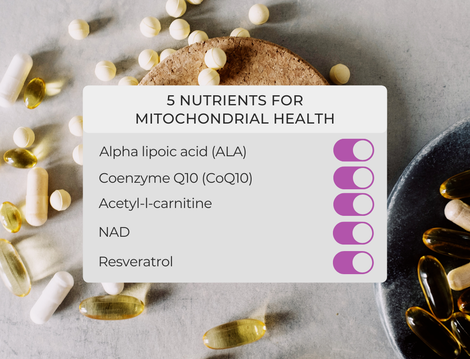 5 Habits for Mitochondrial Health Looking for simple habits you can practice every day to support mitochondrial synthesis and efficiency? Here are 5 science-backed ways. 1️⃣ Eat the Rainbow. Colorful foods are rich in plant nutrients called polyphenols. These are powerful antioxidants, combatting free radicals that could pose a threat to mitochondrial health. Great foods to try? Pomegranates, blueberries, purple cabbage, and green tea! 2️⃣ Intermittent Fasting. Intermittent fasting means eating only during restricted windows of time. Examples include fasting for at least 12 hours overnight, alternate-day fasting, or the 5-2 diet. Studies show that fasting triggers the production of various mediators that support the synthesis and function of mitochondria. 3️⃣ End Shower on Cold. Exposure to cold triggers a series of events in the body that support mitochondrial synthesis. While you can go to the extreme of cold plunges or ice baths, a simpler hack is to end your showers with 30-60 seconds of cold. 4️⃣ High-Intensity Interval Training (HIIT). Any form of exercise is good for your mitochondria, but the best research is on HIIT. HIIT means exercising at high intensity (until out of breath) for brief bursts, alternating with lower intensity to recover. For example, you might sprint for one minute and then walk for 3 and repeat. One study found that 12 weeks of HIIT supported muscle mitochondrial number and function. 5️⃣ Prioritize Sleep. Sleep is a restful time for your body to take care of housekeeping tasks that clear toxins, recover, and rebuild. Adequate sleep is essential for healthy mitochondrial function. This is not an exhaustive list of all the ways to support mitochondrial function, but it does give you some of the simplest things you can do every day at home. Remember—your mitochondria are critical for energy production in every cell of your body and can influence almost every aspect of your health. Signs You May Have Suboptimal Thyroid Function Thyroid hormone is one of the most misunderstood hormones. It’s so misunderstood that as many as 60% of people who have a thyroid issue don’t even know it. Your thyroid gland is a butterfly-shaped organ at the base of your neck. It releases thyroid hormone, which regulates your metabolism, energy levels, brain function, and more. If your thyroid is not working at optimal function, here are some possible signs:
Some people who experience these symptoms end up being diagnosed with hypothyroid. Others struggle with these issues and are told their thyroid labs look normal. That can happen because the normal lab ranges are not necessarily optimal or because not all forms of thyroid hormone have been looked at in the test. 👉 It’s possible to have suboptimal thyroid function even if your routine thyroid labs look “normal.” Women are up to 8 times as likely to develop a thyroid condition as men. If left ignored, it could cause problems during pregnancy or increase your risk of things like heart disease as you age. 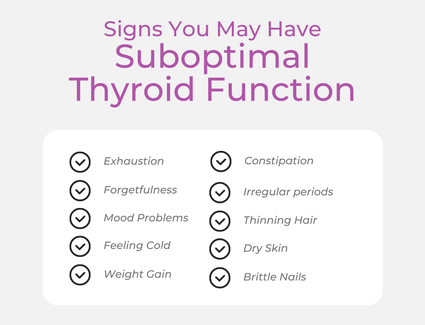 Root Causes of Suboptimal Thyroid Function How could it be possible to experience thyroid-related problems even when routine labs show that thyroid function is “normal?” Let’s break this down. Here’s how your thyroid works: A hormone called TRH is released from your hypothalamus (deep inside your brain), which triggers TSH release from your pituitary gland (also in your brain). TSH travels through your blood to trigger thyroid hormone production in your thyroid gland (at the base of your neck). Your thyroid gland produces 2 active forms of thyroid hormone that circulate through your body:
Even though your body makes much more T4 than T3, your T3 is about 4 times as powerful and considered an even more active form. Your body can also produce reverse T3 (rT3), which actually blocks thyroid function. The most common screening test for thyroid function is TSH. Even when that falls within the lab’s normal reference range, here are some possible scenarios to explain suboptimal thyroid function:
That’s why—if you are struggling with unexplained exhaustion, brain fog, constipation, dry skin, hair loss, brittle nails, or any other signs of thyroid imbalance—it’s so important to have your doctor run a more comprehensive panel of thyroid tests. Of course, the next question to ask is what could be causing suboptimal thyroid function? Here are just a few of the possible root causes:
In functional medicine, we always aim to understand the root cause of your health concerns. We dig deep to look for patterns and explanations. And most importantly, we want to OPTIMIZE your health—because when you are not feeling your best, it affects every area of your life. Nutrients for Thyroid Health Unexplained fatigue. Brain fog. Moodiness. Weight gain. Hair loss. Brittle nails….all of these can be signs of suboptimal thyroid function. There can be many different factors that can disrupt thyroid function (I shared a post about this earlier this month), but one possibility is insufficient nutrient status. So, let’s take a look at some of the most important nutrients for thyroid health. 1️⃣Tyrosine. L-tyrosine is an amino acid present in many protein-rich foods. Your body can also make it from other amino acids. Tyrosine is a building block required for the synthesis of thyroid hormone. 2️⃣Iodine. Iodine is a trace mineral in seaweed, seafood, and iodized salt. It binds with tyrosine as another essential building block of thyroid hormone. 3️⃣Selenium. Selenium is a trace mineral found in especially high amounts in Brazil nuts. Your thyroid gland concentrates more selenium than any other organ of the body. Selenium acts as an antioxidant and also supports thyroid hormone production. 4️⃣Zinc. Zinc is a mineral found in meats and many other foods. It supports enzymes involved in thyroid hormone production and function. This is not an exhaustive list of nutrients needed for thyroid function. You also need B vitamins, vitamin A, vitamin E, iron, and more. One of the best ways to get the range of nutrients your thyroid needs is through a nutrient-dense diet. Why Stress Disrupts Your Thyroid Do you know what your body does when you experience stress? It produces cortisol. Cortisol is an adrenal hormone that is meant to help your body respond to stressful situations. But...too much and too often can have damaging effects on your thyroid. Here’s why: ➡️Cortisol increases the production of reverse T3 (rT3), which blocks thyroid function. ➡️Cortisol decreases TSH, which is needed to stimulate thyroid hormone production. ➡️Cortisol can indirectly lead to higher levels of TBG, which decreases the amount of free thyroid hormone available for cells. There really is a quite complicated relationship between thyroid health and stress because of the hormones involved with each. But there’s a pretty simple takeaway message here: If you want to support optimal thyroid function, you cannot ignore the effects of stress—and that means anything your body PERCEIVES as stress (including things like under-eating or overexercising!). Here are a handful of things you can do to reduce your stress: 🍏Eat in a way that supports healthy blood sugar balance (you might need to be open to including some carbs!) 👟Exercise the right amount for your body (movement is key but not in excess!) 🧘♂️Take breaks (your body needs rest as much as it needs activity!) 💤Aim for sound sleep (this might mean cutting the glass or wine or social scrolls at night!) By Danielle Schwaderer Kettler, ND
The acacias are in full bloom in Sonoma Valley and our community members are starting to feel the effects of seasonal allergies. Allergic reactions to various grasses and tree pollen can elicit common allergy symptoms including runny nose, sore/scratchy throat, sinus pressure, itchy eyes, excessive tear formation, asthma, puffy eyes, hives, rashes and eczema. The symptoms associated with allergies are often driven by an unbalanced immune system, in which T helper cells activate eosinophils and an IgE mediated immune response. This common immune response (Th2) is responsible for producing excess histamine and the symptoms that are common to those suffering from allergies. Shifting the immune response away from a Th2 profile and being supportive of the Th1 immune response is a therapeutic goal for seasonal allergy sufferers. Additional therapeutic goals for allergy season include limiting exposure to allergens, reducing circulating histamine and giving special attention to the gut and adrenal glands, which can all be crucial leading up to and during allergy season.The following recommendations can be utilized by many, to limit or reduce common symptoms associated with allergies: Pollen Exposure: Wear a mask when outdoors, plan outdoor activity after the hours of 12pm (pollen counts are typically highest early morning to 10am) and close the windows when indoors. Pollen Hygiene: Wash clothing and hair after outdoor activity. Do not place wet clothing outdoors to dry when pollen counts are high, as pollen can stick to wet clothing. Vitamin C: Vitamin C can help reduce circulating histamine levels and prevent its release in the body. During allergy season, adults are encouraged to supplement vitamin C at levels approximating 2g per day (2,000mg). To enhance absorption and utilization, try vitamin C in one of two forms: liposomal vitamin C or buffered combinations of vitamin C. Quercetin: Quercetin is a powerful antioxidant that has been shown to reduce the symptoms of allergies in humans and prevent activation of inflammatory cytokines. Typical adult doses range from 250-500mg daily. Read more here. Omega-3's & Fish Oil: Anti-inflammatory agents can be beneficial for reducing inflammation and improving the integrity of the skin. Fish oils and other omega-3 fatty acids can be beneficial for those whom are prone to dryness or rashes during allergy season. Typical adult dosing of omega-3's is 1000mg of combined EPA + DHA daily. Probiotics: Probiotics found in fermented foods and supplement combinations are necessary for a healthy and balanced allergy (T-helper cell) response and overall gut immunity. Herbs & Mushroom capsules: To balance a healthy Th1/Th2 immune response. There are a wide variety of botanical herbs and medicinal mushrooms that help the body modulate the Th1/Th2 immune response, encouraging a shift away from the Th2 (allergic) profile to a Th1(anti-viral/anti-bacterial) immune profile. The most common herb among allergy sufferers is stinging nettle, which is available as a tea, liquid tincture or in the capsule form. Bee Products: Local honey, bee pollen and propolis are longtime naturopathic remedies during allergy season. The premise is similar to that of a vaccine: by consuming honey from bees carrying pollen in close geographic proximity to the allergy sufferer, one may be able to appropriately mount an effective response to the allergen that they are responding to. Saline Sinus Rinse: Saline rinses are useful for thinning mucous and removing allergens and irritants in the sinus cavity. They are especially useful for those prone to sinusitis or sinus infection and can be administered daily by netti pot or as a simple lavage. Read more here. Eye Drops: Even though excessive tearing is a symptom of allergies, the quality of the tears are typically not sufficient to keep the eye properly lubricated. Allergy sensitization drops or tear stimulation drops can be helpful during allergy season to help fight excessive tear formation. Consider Allergy Testing: Regional blood allergy tests are available to determine allergic reactions to different pollens, grasses, pet dander, molds and more. Anti-inflammatory Foods: Maintaining an anti-inflammatory diet during allergy season is always advised to reduce inflammation and prevent excessive mucous formation. Focus on vegetables and lean meats is and avoid foods like sugar, dairy, gluten, nightshades (tomatoes, potatoes, peppers), soy and other personal food sensitivities. As always, if you are on pharmaceutical medications, are pregnant or breast feeding, please speak to a health professional before beginning your supplement regime.
How It Works:
Along with other hydrotherapy treatments, the wet sock treatment consists of a cold water application to the feet. Such treatments can relieve congestion and support immunity by promoting blood flow and nutrients to and from local tissues to internal organs, circulating the lymph (and white blood cells) and allowing the natural course of temperature regulation. Essentially, this treatment can be utilized during times of cold & flu, sinus congestion, ear aches, fatigue and more. How To: The warming sock treatment is very safe and can be performed on the self or to any family member or friend of any age. The treatment is most convenient at bed time. Supplies: - Cotton socks, 1 pair - Wool socks, 1 pair - Ice cold water - Basin, sink or bath tub of warm water - Hand towel Directions: 1. Place feet in hot/warm water or bath for 5-10 minutes 2. Towel Dry feet 3. Using very cold water, wet one pair of thin cotton socks and wring out well. 4. Place cold wet socks on warmed feet. 5. Put one pair of wool socks over the wet socks and climb into bed. 6. Cover up with blankets and sleep. Remove both pairs of socks in the morning and if you (or your child can't stand it), keep them on at least until the socks are dry. Additional Recommendations: As always, drink plenty of water and fluids to help with circulation of nutrients and immune cells and elimination of toxic waste. Avoid dairy, sugar and alcohol when ill to reduce inflammation. Take baths often, epsom salt baths are preferred. Cheers to health & vitality!
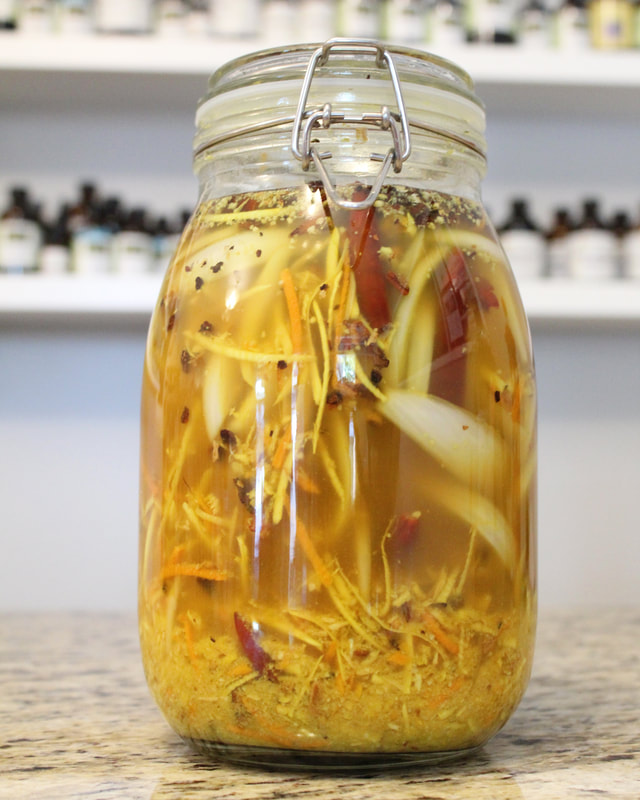
 Ingredients of Traditional Fire Cider: Apple cider vinegar: raw & unfiltered Ginger: 1/2 cup fresh, peeled & grated Turmeric: 1/2 cup fresh, peeled & grated or 1 tbsp powdered Horseradish root: 1/2 cup fresh, peeled & grated Onion: 1 medium brown, chopped Garlic: 10 cloves, chopped Peppers: 2 Jalapeno or cayenne peppers, diced. *Or 1/4 tsp dried cayenne powder Optional Immune Enhancing Ingredients: Astragalus root, echinacea root, wild cherry bark, rosemary, thyme can be considered to enhance the flavor or immune modulating benefits.
Adult Usage Recommendations: 1 tablespoon daily: For warming the body and optimizing digestion. 3 tablespoons daily: For boosting immunity during cold & flu season. Fire cider can be added to water as a stand-alone treatment or can be combined with olive oil as a salad dressing or drizzled on vegetables. Fire cider can be spicy and is often not appealing to children. Store your fire cider in the refrigerator for up to a year. Enjoy your cider!  These statements have not been evaluated by the FDA and do not intend to diagnose or treat illness. Please consult your physician prior to use.
We're happy that you all have made it safely through the tragic wildfires that ripped through our beloved hometown. Please know that you all have the support of your community and neighbors while homes and lives are rebuilt in Sonoma and our surrounding areas. We were hoping to have a more detailed blog post prepared giving our checklist and the health benefits of each recommendation, yet have come to realize that our time and energy is needed directly assisting patients and customers in our shop. Please look over the checklist below that was made with the intention of helping the body process toxic wildfire smoke and heal on a mental, physical and emotional level. Each bolded category are simply recommendations of areas to focus, with specific formulas or suggestions listed below. The list is not intended to be completed in entirety. If you have questions or would like further guidance, please stop by Sonoma Roots during our normal business hours (M-F 10-5:30pm). Our hearts are with all of those affected by or have lost loved ones and personal property in the fires. Be well, Sonoma. 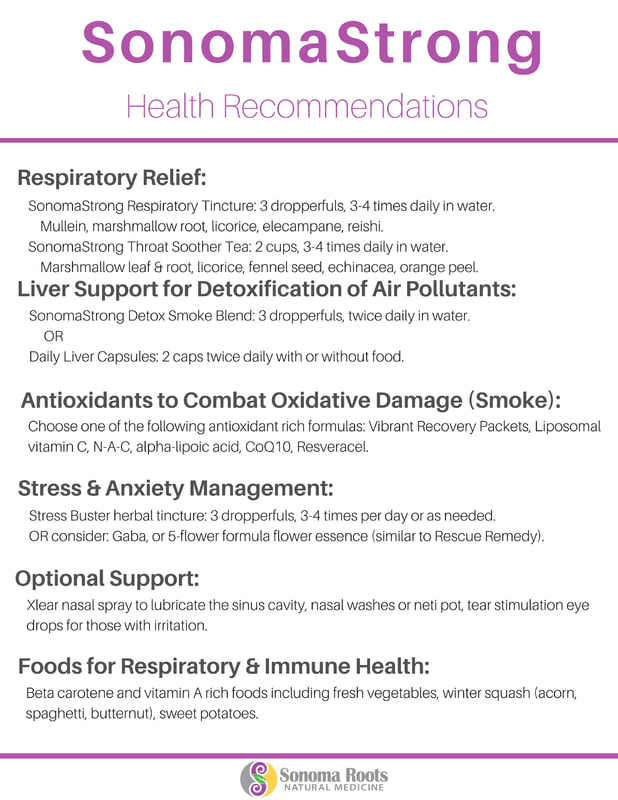 These statements have not been evaluated by the FDA, nor are they intended to diagnose or treat disease.
Signs & Symptoms of Dehydration:
Potential Causes of Dehydration:
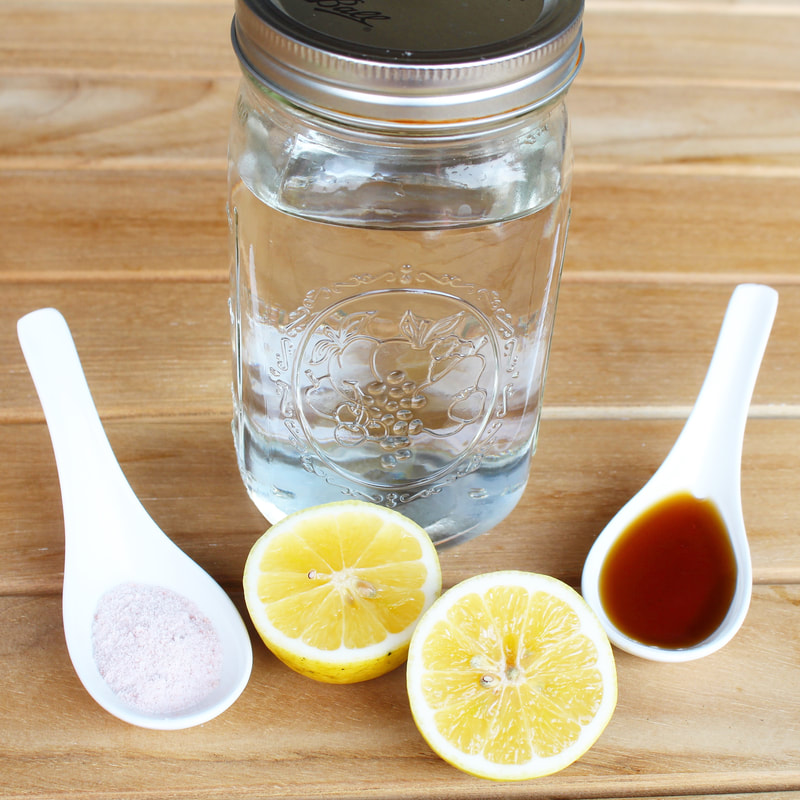
Recipe for Natural Electrolyte Drink:
Directions: Mix all ingredients together in a glass jar and stir or shake (with lid secured) until honey and salt are dissolved. Another option to speed up the dissolving process is to use warm water. Let cool and drink 1-4 servings per day depending on amount of heat exposure and physical activity. Store the remainder in the refrigerator. Drink up and stay healthy! When not addressed properly, dehydration can accompany heat exhaustion and heat stroke. If one is showing signs of heat stroke, seek immediate medical attention, as heat stroke is a life-threatening condition.
 Join our week of discounts and deals for customers of Sonoma Roots. Stop by our shop all week long and take advantage of the following deals: 20% off of Sonoma Roots branded products (supplements, teas, tinctures, body oils, & more) 20% off of facials by Bloom Skin Care & Waxing (use by 9.15.17) $20 B-12 shots (scheduling required) $20 off 12-pack of 15 minute Infrared sauna sessions 10% off of health related books Free hearing screenings (7.19.17 10-12pm - call to schedule)
Thank you for helping us make it through another successful year in business in Sonoma Valley! Hours: M-F 10am - 5:30pm website: www.sonomaroots.com ph: (707) 996.4656 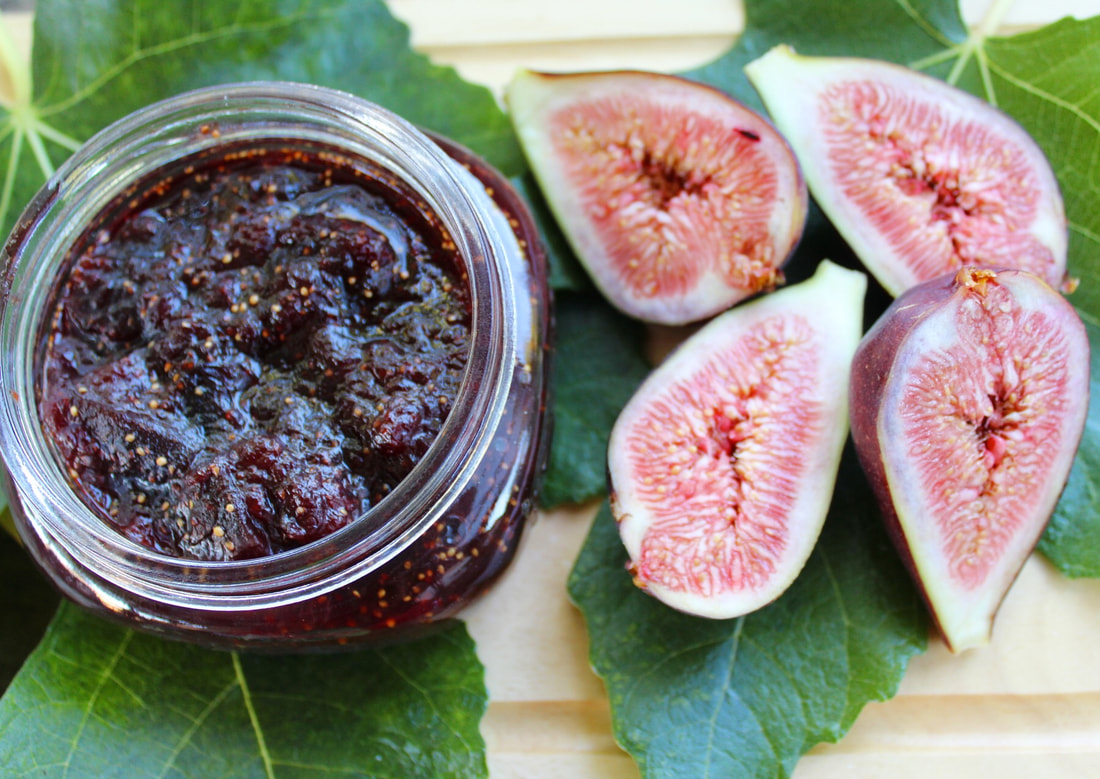 It's fig season in wine country! If you are like me, and don't want your delectable homegrown goodies to go bad, preserves are the perfect solution. My first attempt at fig preserves turned out pretty well for being sugar-free and pectin-free. If you desire a thicker preserve, the addition of pectin or gelatin may be considered. Fig Honey Preserves: Makes about 3-4 cups of preserves. Ingredients:
Directions: Place the figs in a large saucepan with water and coconut sugar. Stir and let sit unheated for 20-30 minutes. Bring the mixture to a gentle boil over med-high heat for 2 minutes, then turn down the heat to bring to a simmer. Simmer for an hour, stirring often. As the cooking process progresses, the figs will start to break down. If you desire more mashed preserves, mash the mixture up with a potato masher towards the end of the cooking process. Once the hour of cook time is complete, add the honey, lemon juice and lemon zest, stir and cook for another 3-5 minutes. Adding honey at this stage will allow for it to retain some of its healing properties. Turn off heat and allow the preserves to cool for a little bit. After cooling for 10-15 minutes, ladle out the mixture into clean jars. Place the lids on and allow to cool before placing in the jars. The preserves should last in the refrigerator for about 3 weeks. If you desire a longer preservation, process the jarred preserves in a hot bath for proper canning methods. 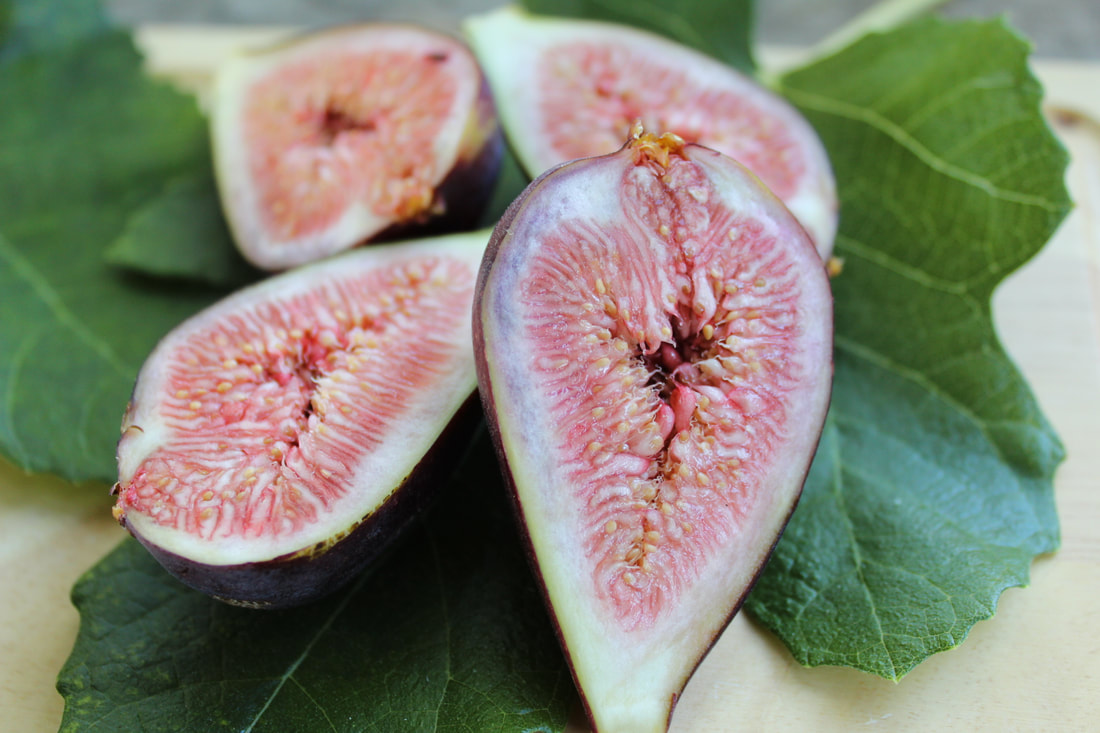 I was able to make this recipe using homegrown figs and meyer lemons accompanied by local Sonoma honey. The fig preserves pair perfectly with goat cheese or chèvre. Cheers to health and sustainable living! |
About Our Blog:Author: Categories:
All
Archives:
November 2022
|


 RSS Feed
|
Shop Hours:
M - Th: 10-5:30pm, Fri 10-2pm |

|

|
Stay Connected with Us!

|
(c) Sonoma Roots Naturopathic Inc 2023 - All rights reserved